
TRUST RECORDS KEEPS THE CODE
The Album Era, it’s said, began in the mid-1960s and lasted into the 2000s. It was an impressive run. But as streaming took hold and attention spans contracted, the LP hurdled toward obsolescence, and the music industry, or most corners of it, searched for a replacement.
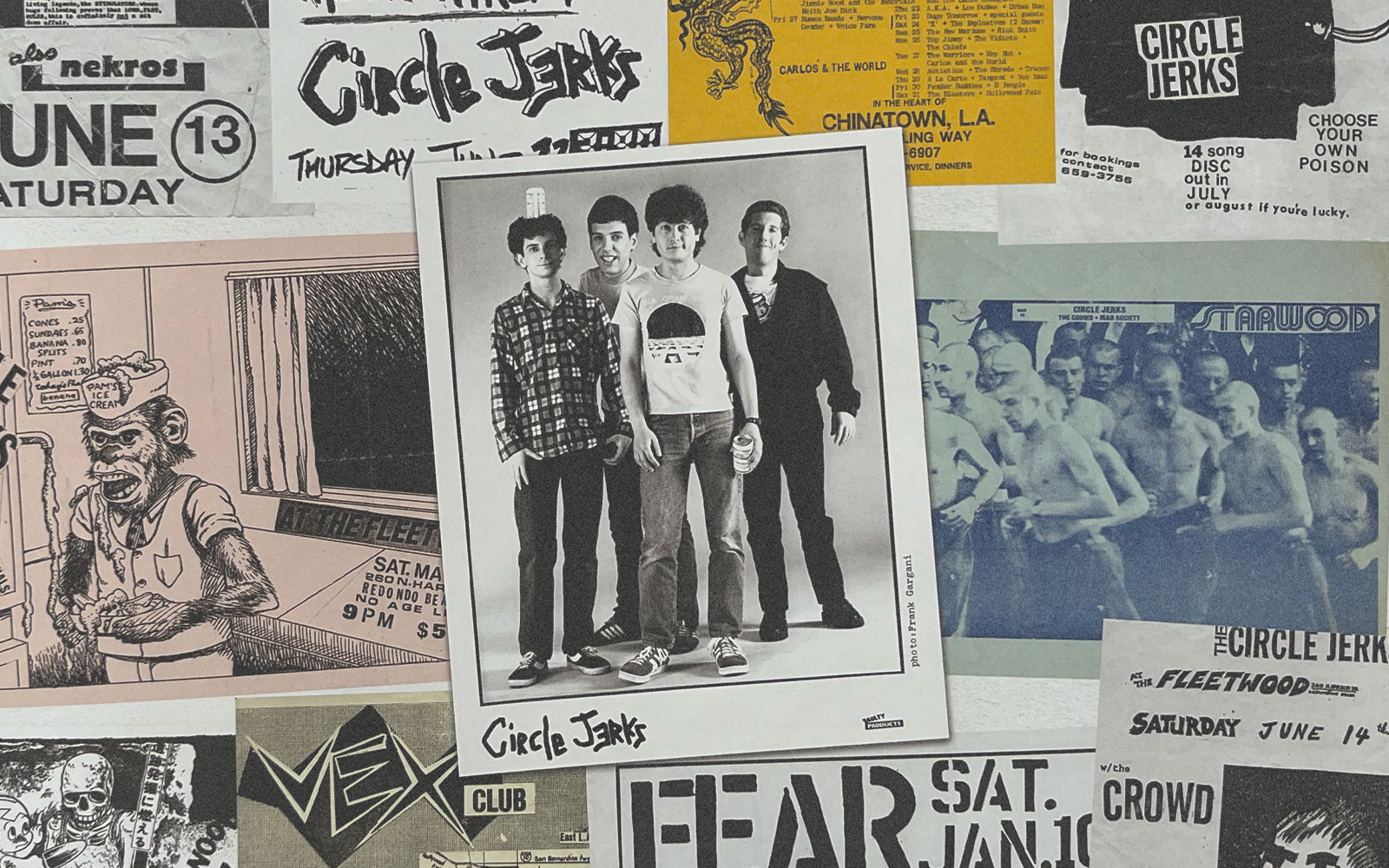
Hardcore didn’t. Bands recorded and released music, but selling records was never their endgame. Groups became canon on the strength of live performances and a handful of songs. Some of hardcore’s most cherished recordings were originally pressed on seven-inch vinyl EPs; many have yet to arrive on streaming platforms officially. With light marketing and little algorithmic assistance, these collections are free to discover organically, albeit ahistorically, whether online or via physical copies.
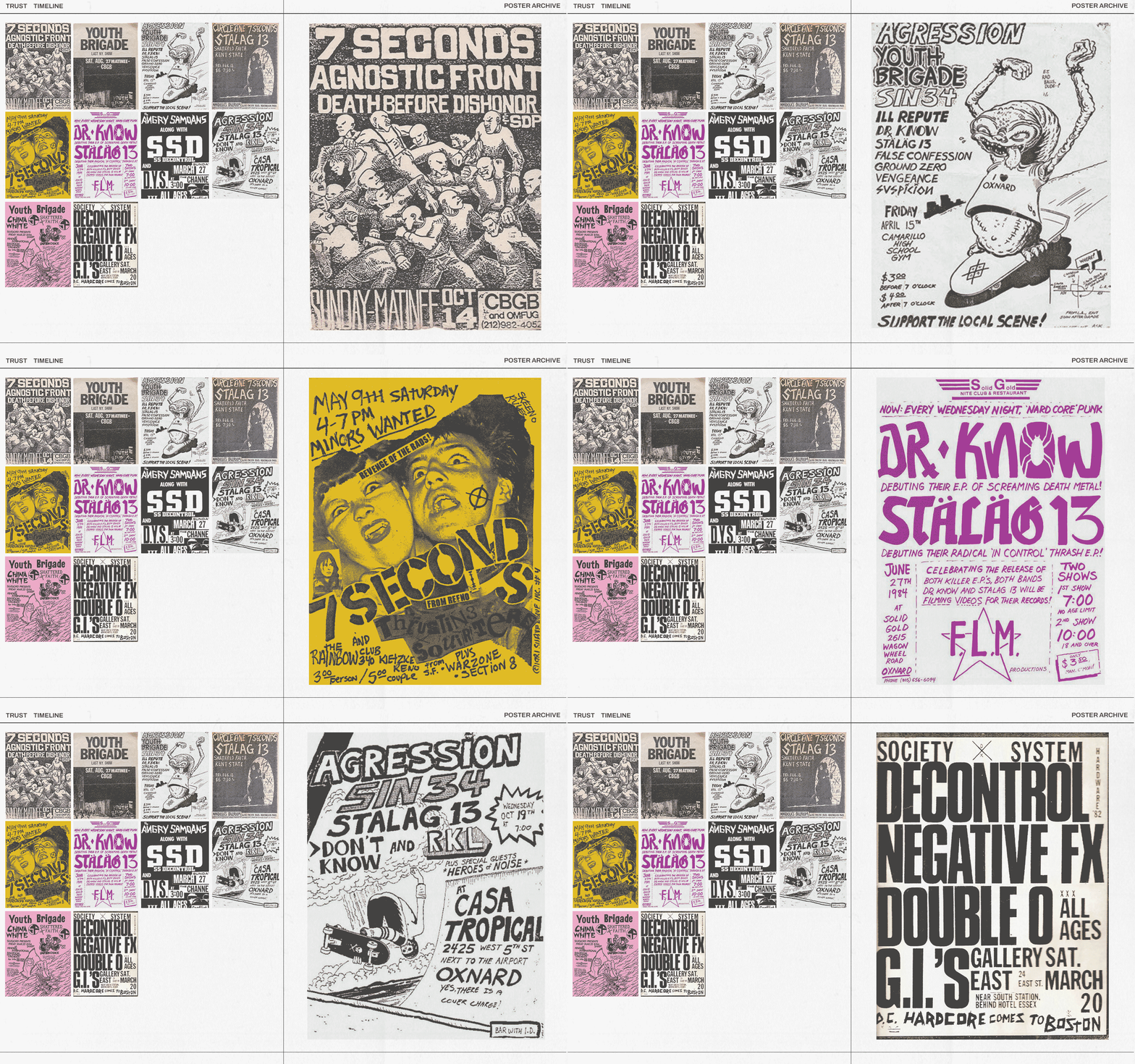
Those records—alongside zines and other documents of ’80s hardcore—are vivid snapshots of a community created by fans and fueled by adolescence. Finding the scrapbook is part of the experience. And despite the yearly “hardcore is primed for a breakthrough” stories and sporadic corporate investment in the genre, fans who came of age with the uniquely anti-establishment music are the ones preserving it.
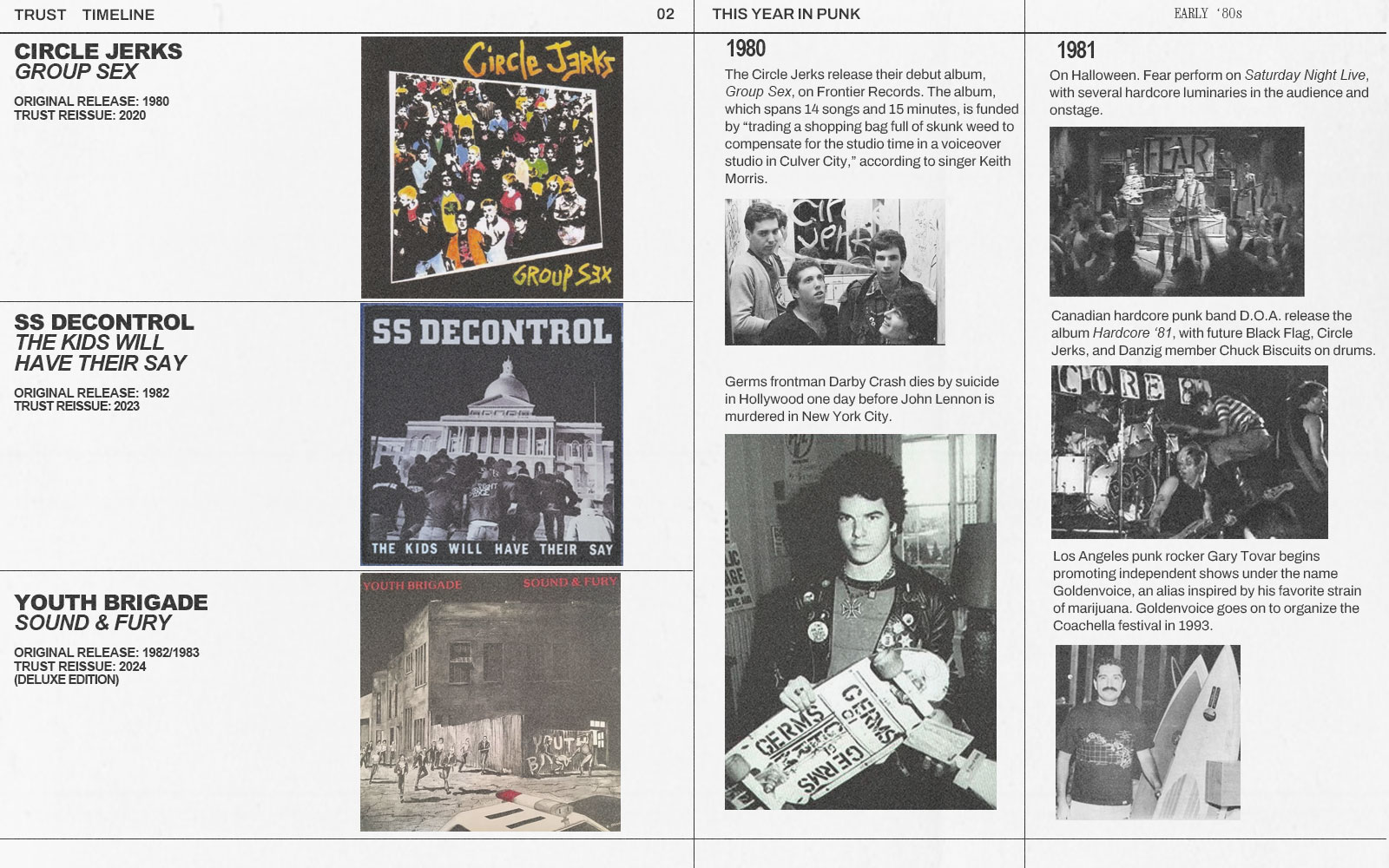
“The records are the hub, and everything else spins around it,” said Joe Nelson, co-founder of Trust Records, a label he and partner Matt Pincus launched in 2020 to release archival material from foundational hardcore bands like 7 Seconds, the Circle Jerks, Youth Brigade, SS Decontrol, and SNFU. “We want to contextualize the music so you can listen to it on its own or see the picture through the entire package.”
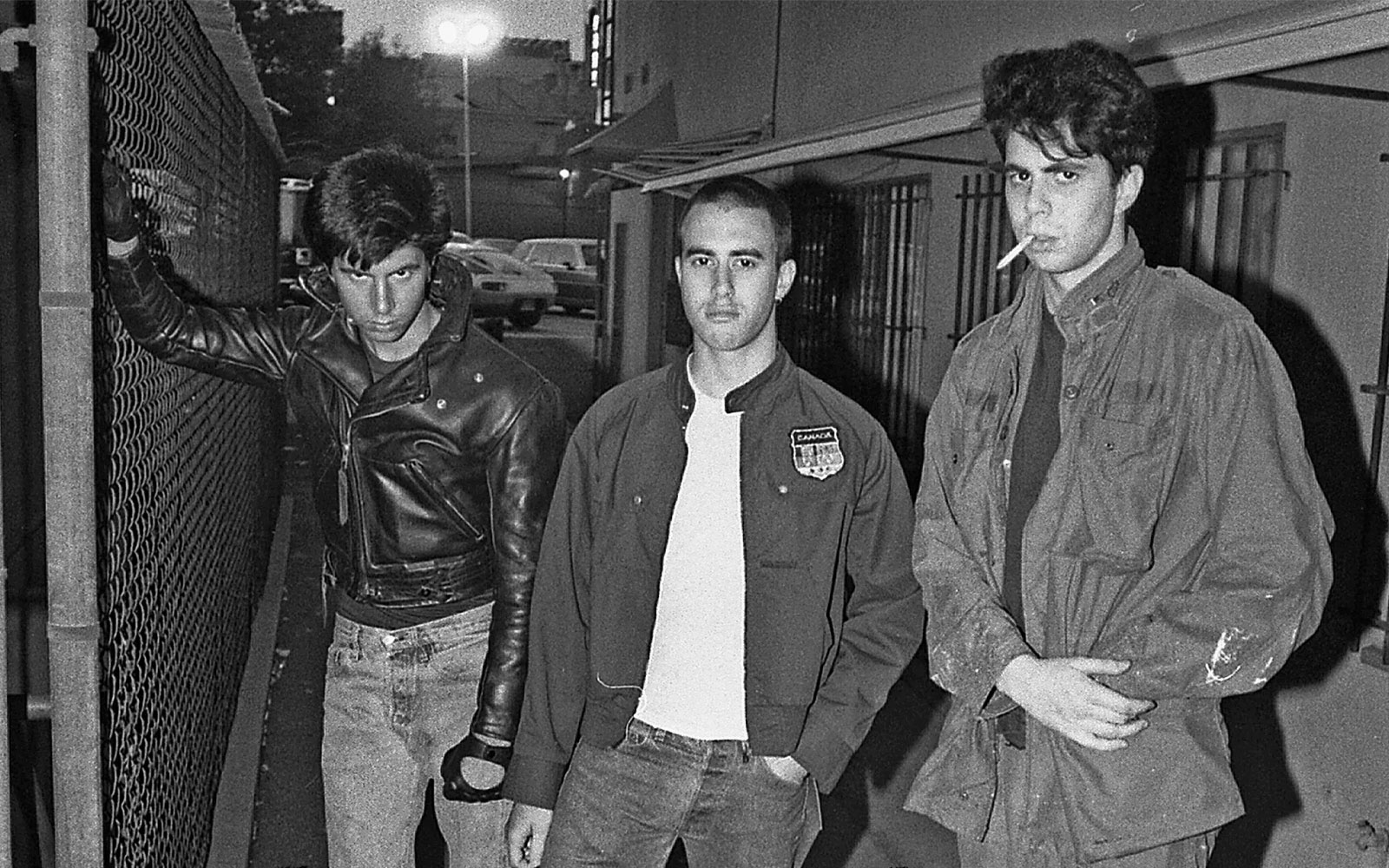
Pincus and Nelson met in 1989. Nelson toured with Insted, an Orange County, California, straight edge band, while Pincus played in Judge, a New York City straight edge outfit whose metallic crunch and militantly emotional lyrics challenged the conventions of the genre.
“I hit the fucking jackpot,” Pincus said. “I was a weird choice for the band. I came from a wealthy family—I wasn’t a typical kid from the scene. Judge changed the course of my life. I got off drugs, I got better grades, I got to tour the U.S. What the straight edge scene showed me was that you could use your anger as an advantage.”
Nelson went on to front Triggerman and Ignite in the ’90s, but his charisma offstage outweighed his resume. Tall, broad, and perpetually smiling, he has a distinctly Southern Californian charm and a penchant for mischief, which made him the perfect tour guide for visiting bands. Furthering his lore was the Sloth Crew, Nelson’s friend group of party-crashing straight edge kids, who developed a statewide reputation for, well, hanging out. Whether it was shows, tours, or general mayhem, Nelson had a knack for connecting people. That led him to a 20-year career in music merchandising.
“Joe’s the Zelig of hardcore,” Pincus said. “He knows all the people in this world.” Most of the music business revolves around assets, but hardcore lacks the same commercial impulse. “It all comes back to people—their thoughts, feelings, stories, and ideas,” Pincus said. “Joe personifies that in a million ways. There’s no one like him.”
Following Judge’s dissolution in 1991, Pincus—the self-proclaimed “fucked-up son of a Wall Street mogul”—enrolled in Columbia University; in 2002, he graduated with an MBA. He then worked in strategy for EMI Group Limited—a British music conglomerate whose eponymous record label was name-checked by the Sex Pistols—before co-founding Songs Music Publishing.
Songs showed Pincus the commercial potential of the emerging indie scene of the 2000s, an opportunity the music establishment missed. In 2017, Pincus sold Songs for $160 million, but not before testifying before the United States Senate against Big Tech’s exploitation of artists’ streaming royalties.
“There are two types of people in the music business: people who come up through the system and people who feed on what’s in the wild,” Pincus said. “The goal for Songs was to be the people left of center who cared about the good shit and get as big as we can without forgetting who we are.”
On the side, Pincus founded the nonprofit publishing company Know Your Rights. His goal was to secure publishing royalties for hardcore musicians who never received songwriting revenues. After he brought Nelson on board, the two saw how sticky the ownership of the songs could be. Bands fought for decades about who wrote what, though many of the songs were never published, and few artists had legitimate publishing deals. With songs left unregistered, part of the money attached to them slipped past their writers.
“Placed in a black box collected from streaming that can’t be allocated to the publisher, the money gets paid out in market shares to the majors,” Pincus said. “A hardcore band’s publishing money was getting paid out to Katy Perry. Know Your Rights was trying to solve for that. But we realized the problem wasn’t publishing; it was on the label side. The answer was starting a label.”
Profit wasn’t the goal.
“I don’t give a shit about making any money off this,” Pincus said. “Hardcore can be skeptical and conspiratorial, so Trust wasn’t started as a commercial enterprise. We do this to preserve this music for the generations to come—so there’s continuity.”
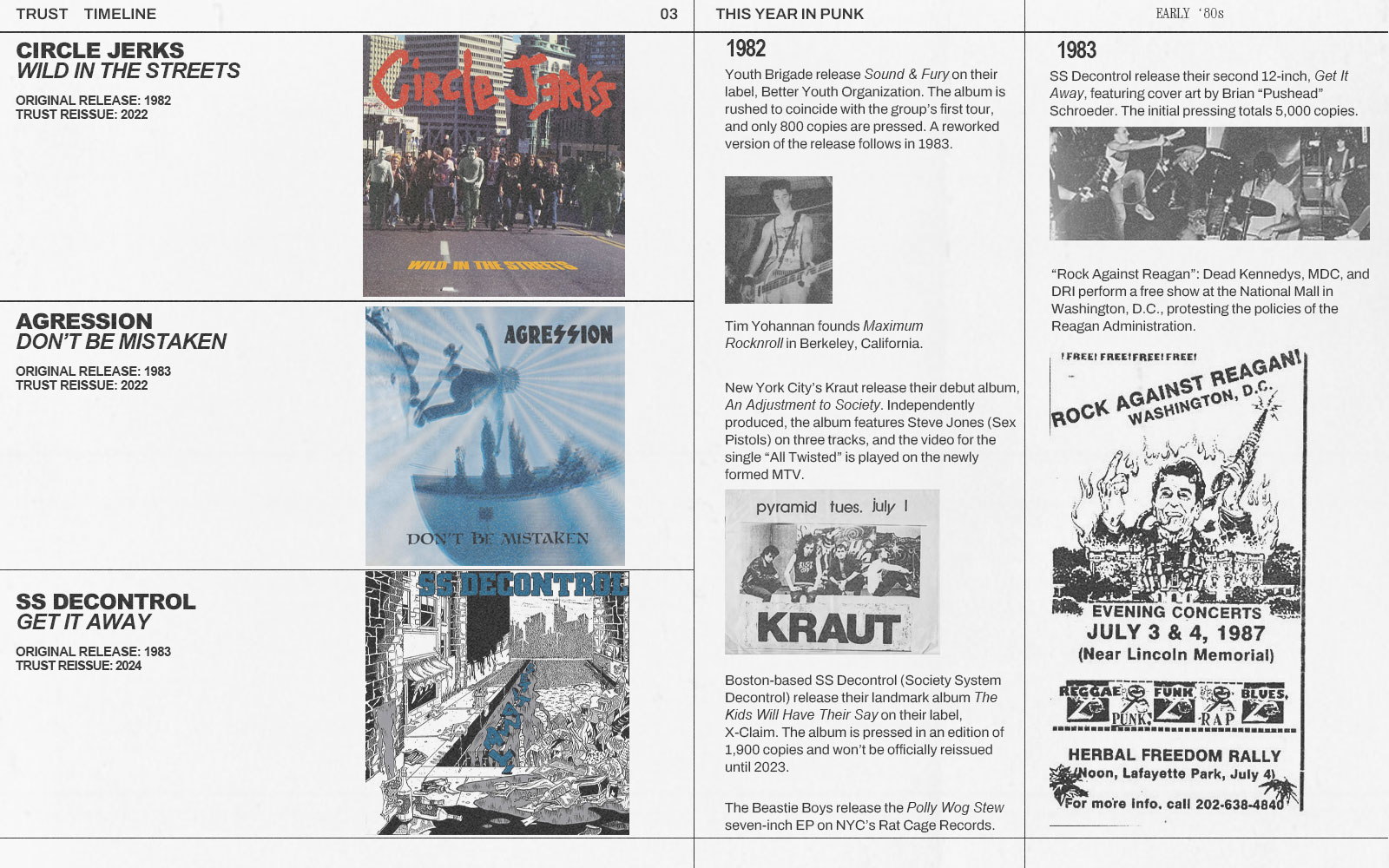
There’s an urgency to the mission. After working to repress SS Decontrol’s sought-after landmark records The Kids Will Have Their Say and Get It Away, Al Barile, a founding member of the group, died in April 2025. He was 63. Trust’s reissue of Agression’s Nardcore skate-punk classic Don’t Be Mistaken arrived in 2022, a year after bassist “Big Bob” Clark passed away. He’d been working on the release for a year alongside Nelson. Circle Jerks vocalist Keith Morris performed a sold-out show in Hollywood celebrating his 70th birthday on September 19, 2025. Even a genre built on youth can age out of it.
Trust is rooted in Pincus and Nelson’s formative years. Shortly after starting the label in 2020, Pincus tapped childhood friend Sam Siegler, a former bandmate.
“I grew up on 15th Street,” in New York City, Siegler said. He first met Pincus at Friends Seminary, a Quaker private school in Manhattan. “On orientation day, I saw this kid with a mohawk and literally went up to him and said, ‘Hey, man, are you punk rock?’ That was Matt Pincus. He was really fucking punk rock. He came from money and was rebelling against all that. He ran away from home, got kicked out of school, and ended up in a boarding school for criminally minded children. Pretty gnarly shit.”
Though Trust shuns formal titles, Siegler—whose father was a jazz drummer—focuses on the label’s experiential marketing. A child prodigy who could play a fast beat with swing, he joined Gorilla Biscuits at age 12 before playing with Side by Side, Youth of Today, Judge, Project X, CIV, Rival Schools, Glassjaw, and others, including a brief, bizarre stint with Limp Bizkit.
Siegler and Pincus also ran the independent label Some Records with Walter Schreifels, who played with Gorilla Biscuits, Quicksand, and Rival Schools. Named in homage to the exclusively hardcore brick-and-mortar owned by Duane Rossignol on East 6th Street in Manhattan, Some operated from 1997 to 2013, working with an eclectic roster of bands. Despite their vision and drive, Siegler says it dissolved, in part, because the label couldn’t adjust to the streaming world.
As a genre, hardcore’s always suffered from an unfair younger-sibling syndrome. Without the shock value or mythologized degeneracy of punk rock, it survives on ethics over marketing or branding. Like free jazz, it’s an acquired taste, specifically the raw, early recordings that established the genre. In a sense, hardcore’s never broken through to the mainstream, but its community and idealism have challenged the idea of how a band can grow with its audience.
There’s a duality to the music itself. On record, songs can sound like literal calls to smash the state, to rip things up and start again. Live, the audience becomes part of the performance, and the mass participation in the moment becomes a distraction from the outside world. Dodging limbs, fighting for the mic, or finding your own internal rhythm to the sounds requires intense energy and focus you don’t see at a typical concert.
“Everyone who’s ever been into hardcore is connected spiritually,” Nelson said. “Connection with humans. You got fucking some dude jumping on your head. It doesn’t get more connected than that.”
Unlike vinyl labels that secure turn-and-burn licensing deals, Trust’s scope is large and personal. The recent Ink & Dagger Complete Works box set included a 226-page book, part of its deluxe edition; the release sold out instantly. The label works methodically to produce detailed accounts of bands and releases, sourcing materials from from collectors, fans, and others who documented the moment.
That restoration comes at a price.
“I have so much respect for people who restore cars or build furniture and shit,” Nelson said. “To me, that’s art. We’re spending more restoring the recordings than they originally cost. Before you’ve even worked on the layout, you’ve spent four or five grand in audio production. Then we’re licensing photos and artwork. We try to work with the best people who understand hardcore, because we want to make a museum piece. Sometimes that takes years.”
Nelson and Pincus restore the original artwork without modernizing it, a process that requires more than high-resolution scans. Whether it’s lengthy oral histories, limited merch runs, video, or events, Trust wraps hardcore in the production quality it always deserved, stopping short of altering the sound quality or integrity of the recordings.
“We always keep the original mix,” Nelson said. “Bands have asked to do remixes. Those are hard conversations. We’re 100 percent artist-friendly, but ‘no remixes’ is the No. 1 rule we can’t break. ‘But the drums should come up.’ No, dude, I’m so sorry. That’s not happening.”
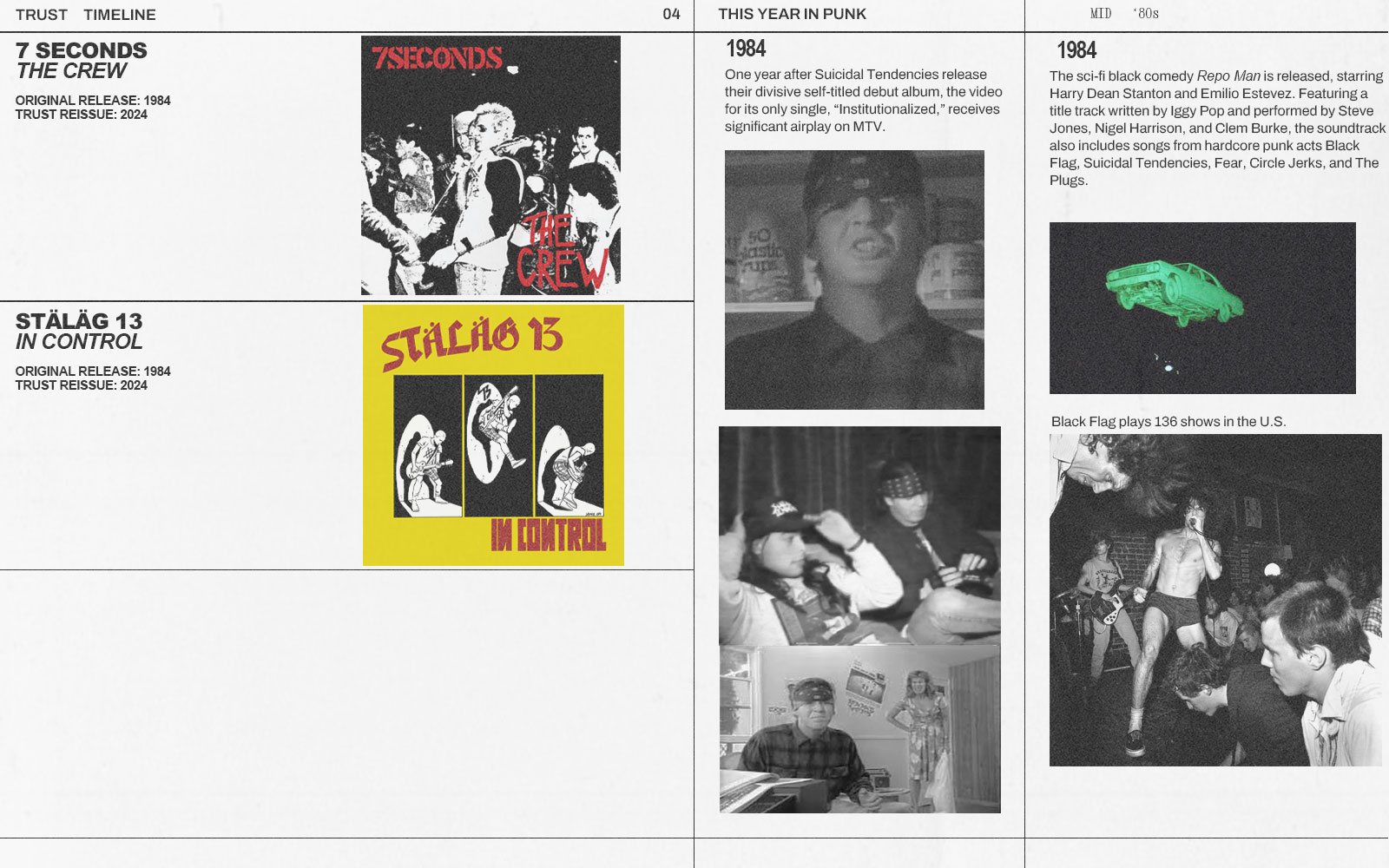
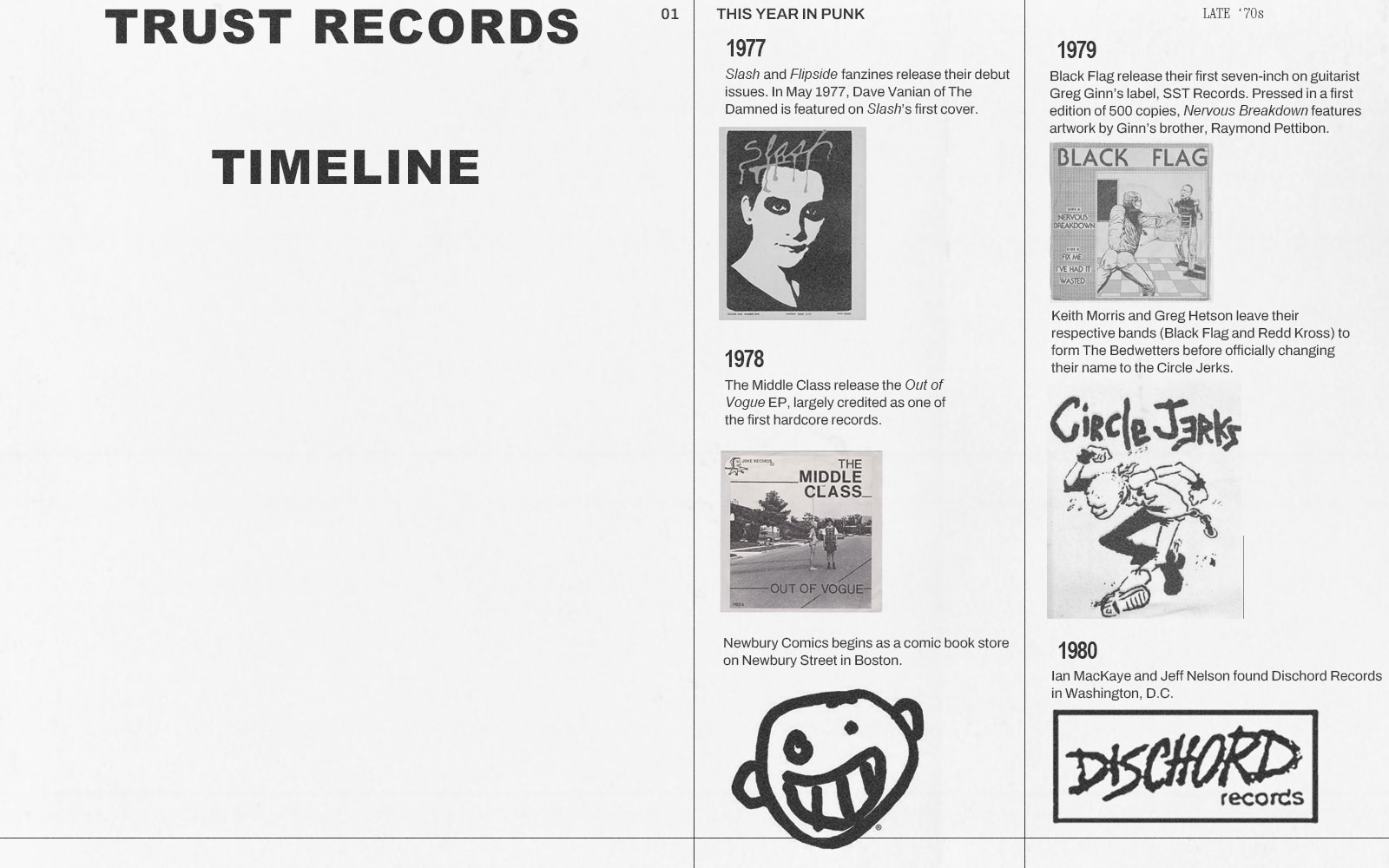
Nelson first experienced hardcore live in 1984, during Black Flag’s My War tour. But Trust isn’t an attempt at revisiting anyone’s youth. Everything the label produces, from albums to T-shirt designs, is meant to carry the story into the present.
“The merch was how you got from city to city,” Nelson said. “When I went out with Insted on their last tour in 1991, we brought 110-dozen shirts stuffed in trash bags. Every part of the van was packed. I had to sit between the driver and passenger seat for two weeks, until we sold enough shit so I could get to the loft.”
In the ’80s, bands like DOA and Black Flag forged the path for independent groups to tour. Merch sales became essential revenue. Black Flag and SST Records mastered this to a fault, to the point that some strident fans mocked the almost store-in-store displays founder Greg Ginn would bring on the road. A hardcore band offering multiple shirt designs and distributing records could appear to be a cash grab, especially to anyone who never ate shit on tour.
But merch grew into a visual component and cultural identifier of hardcore. More than souvenirs, the shirts you took home had a purpose. As much as the records in your collection defined you to anyone flipping through it, a T-shirt with a bold logo was a symbol of who you were. The benefit was knowing your dollars went directly to the band.
“The art sucked me in before I heard punk rock,” Nelson said. “Seeing the Black Flag logo stenciled around L.A. or Raymond Pettibon’s artwork on flyers built a dark world, but you wanted to be inside it. Look at the Sex Pistols’ album. It’s such a smart piece of art. No matter where you put that in a record store, it’s going to be the first thing you see.” But the shirts weren’t an attempt at art that would one day hang in galleries, though it now does.
Whether they were built by bands to release their music or as regional collectives, hardcore’s original labels functioned as more than entities to produce records. Touch & Go, Dischord, Alternative Tentacles, and SST offered simple deals but, more importantly, visibility and creative liberty. Budgets were small, and bands could hit the road nationally with only 1,000 copies of an album in circulation, counting on college radio and word of mouth to fill venues. While supply and demand made many hardcore seven-inches collectable, scarcity or even exclusivity were never the intention.
“That scavenger hunt aspect got us excited about hardcore initially,” Siegler said. “You had to play detective to even find the records.”
There’s no legacy in the moment. In the ’80s, bands like Black Flag and Hüsker Dü outpaced their audiences with live sets comprised heavily of yet-unreleased material. Rather than re-press existing albums, some labels put their resources toward the next crop of releases. If a band broke up, their records went out of print, sometimes for decades. And while independent labels like SST and Alternative Tentacles are still operating and preserving their archives, they’re the exceptions. Most lasted just a few years and delivered only a handful of releases.
“Revelation, Dischord, Epitaph—these labels look after their catalogs,” Pincus said. “We’re looking at the ones that fall through the cracks. We made a list of the 200 records that matter the most to us and started there. Let’s go get them all and give them the right treatment, because this shit is great American music.”
Business is no longer a dirty word in hardcore, nor is it a necessary evil. It’s an apparatus that keeps the music alive. And it’s a mechanism that allows artists to profit from old releases—even if Nelson knows to temper their expectations.
“The Circle Jerks never made money off their records. Ever,” Nelson said. “Forty years later, they’ve made money with us.”
Nelson doesn’t blame the labels of the time for money bands never saw.
“Sometimes those old contracts were on a paper napkin,” he said. “Seriously. The splits don’t make sense; the music was never properly published. No one knows who even owns the shit. No one ever approached it as a money thing. These were lean operations focused on putting the next thing out.”
Even today, Nelson will reach out to someone about a streaming check, “and it’s crickets for months.”
Trust Records doesn’t operate around a release schedule. The label lives far from spreadsheets and moves when opportunity strikes. Physical releases and events shape its strategy in tandem, with the mission to preserve hardcore’s history providing the guardrails.
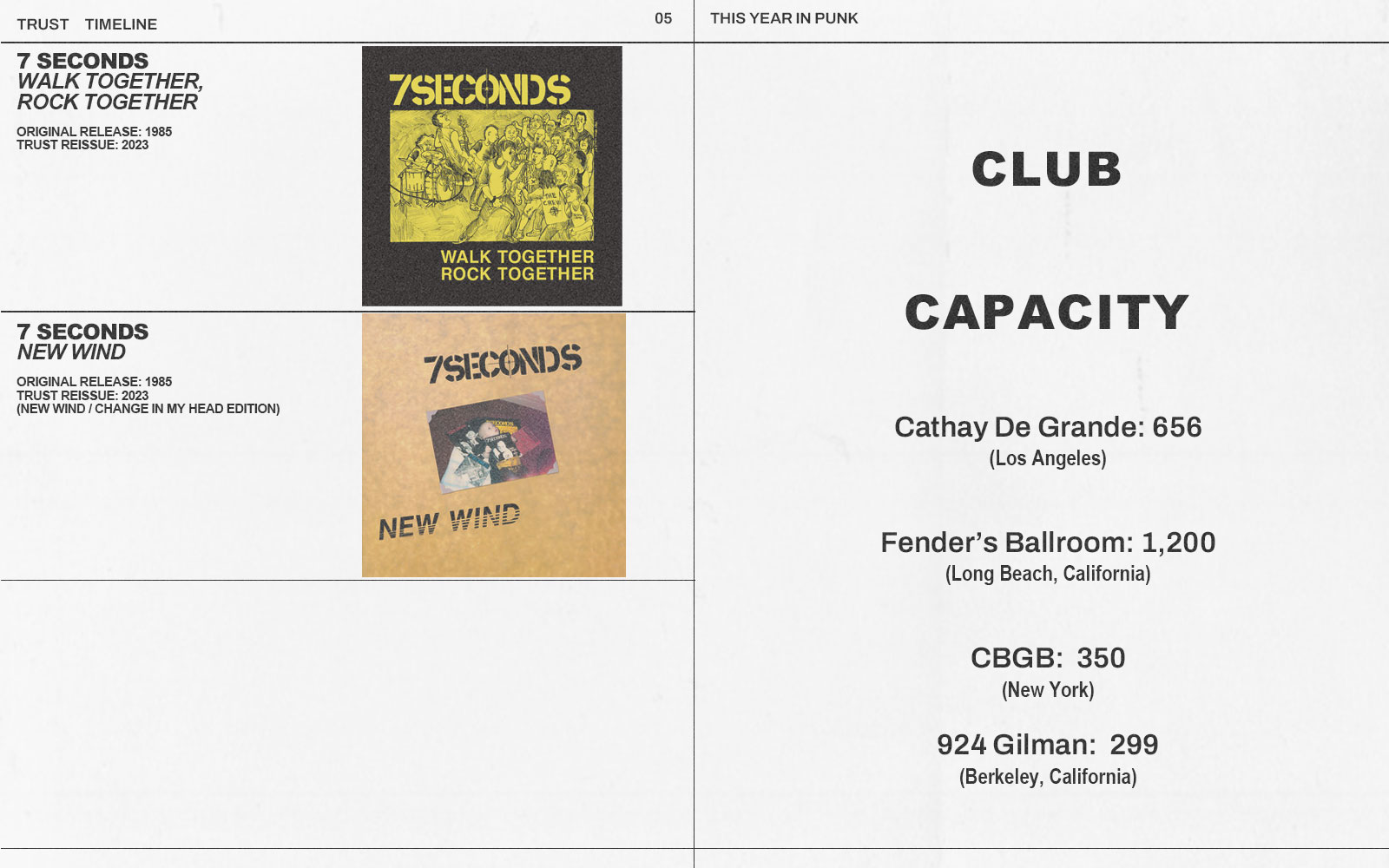
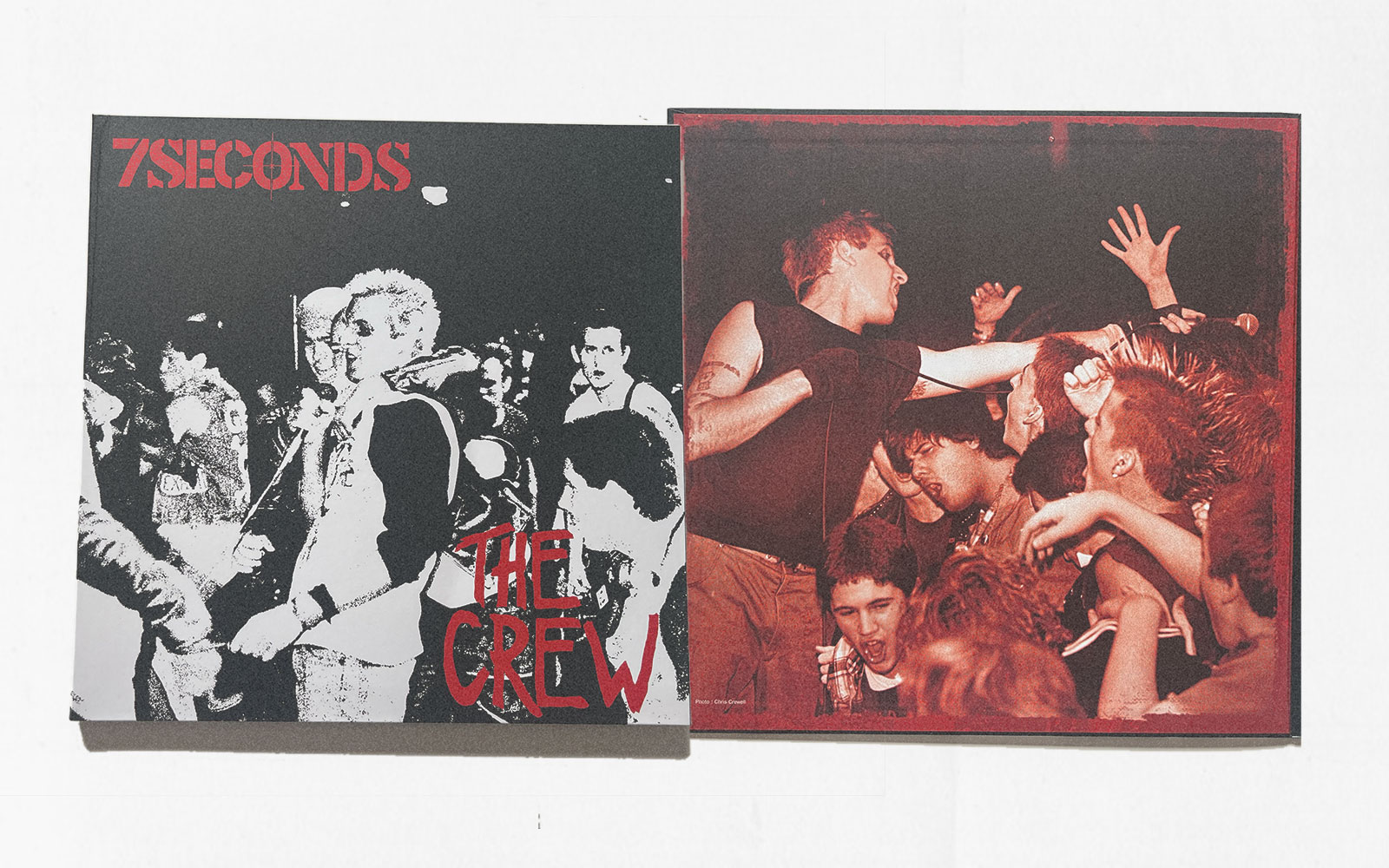
“If we could sell to a big-box store or a museum, we’d sell to a museum 100 out of 100 times,” Nelson said. “We don’t make spatulas. Spatulas aren’t counterculture. We’re representing an entire culture with each release. Target or whatever sells brands. I mean, you go in there and you can buy a fucking Coca-Cola or a NASA T-shirt. I love that for about $70, you could pick up three 7 Seconds records, read the booklets, and get a detailed snapshot of the entire band and who they are.”
“What’s the saying? History’s told by the victors? With counterculture, you can change that. History is told by the documenters.”
WRITER: ANTHONY PAPPALARDO
GRAPHIC DESIGN: ULTRABUFFET STAFF